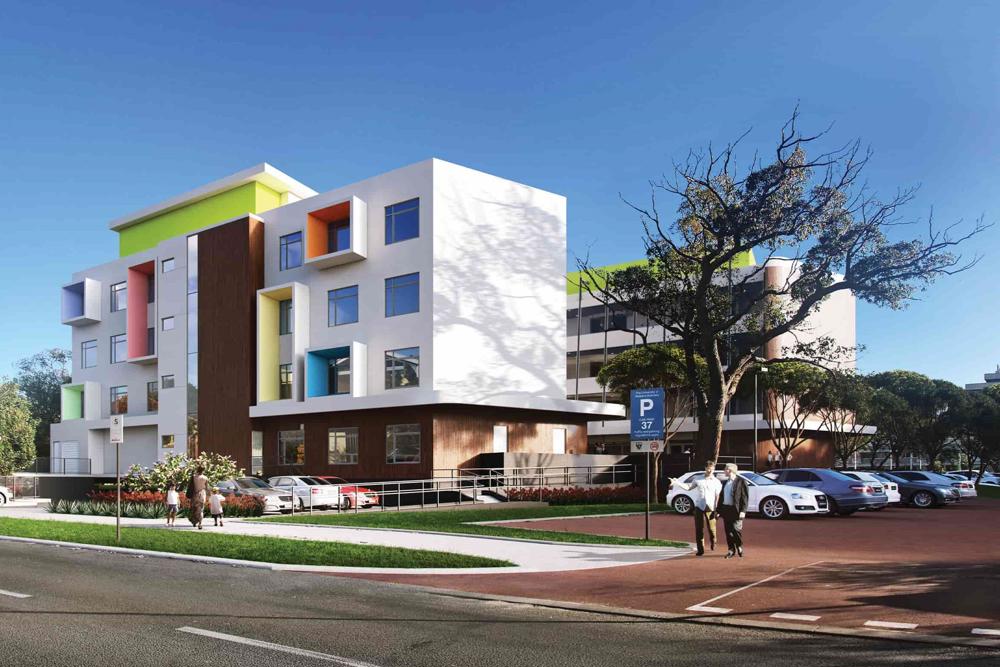

The new $15 million facilities at Australind Senior High School — including the stage two Bilya Wing — is now open.
Named after the Noongar word for ‘river’, the new wing overlooks the Brunswick River and adjacent wetlands of Pinjarup Country.
The new facilities include a two-storey classroom block consisting of 10 general classrooms, an art studio, STEM room, two science laboratories, inclusive life skills room, and a conference room with kitchen and toilets.
Collie-Preston MLA Jodie Hanns said with this major upgrade, the students and staff at Australind Senior High School will have the modern facilities necessary to learn, teach and achieve at their very best.
The building features Aboriginal art-themed furniture and has been designed for all-ability access, inclusive of a lift.
The upstairs conference room is used as a Year 12 common room, where senior students can enjoy a dedicated space to meet with peers during breaks.
The two-stage redevelopment project also provides a dental therapy centre, welding workshop, refurbished student services area, and a basketball court at Australind Senior High School, along with a resurfaced sports court at the adjacent Australind Primary School.
Eight transportable classrooms have been removed to provide more green space for students — and a free-standing artistic sculpture based on the Fibonacci Sequence has been added to the school’s sculpture trail.
The project is part of the WA government’s significant $1.5 billion capital works program to build and improve public education facilities across Western Australia.
WA Education Minister Dr Tony Buti said: “Investing in regional school facilities is essential to ensure every Western Australian student has access to a high-quality education, regardless of their location.”


 acknowledges the government’s recently announced $10 billion housing fund initiative to construct 30,000 new homes in the next five years as a positive initial step in addressing the immediate housing needs of Australia. However, this vision needs to encompass not just housing, but the development of sustainable and resilient infrastructure to effectively support population growth. *The Intergenerational Report 2023*, recently released by the Treasurer of Australia, echoes this necessity, outlining the critical role of infrastructure in supporting socio-economic development and enabling economic and productivity growth. It highlights the continued and increasing investment in infrastructure to help reduce congestion and ensure the smooth, efficient movement of goods and people nationally and internationally. These measures are instrumental in enhancing connectivity, providing access to employment, healthcare, education, and community activities. CJC Management believes that true, sustainable growth requires a far-reaching, holistic approach. While appreciative of the government's focus on housing, the company recognises that extensive and collaborative efforts are needed beyond this sector. CJC Management Group Managing Director Colin Calder said: “The $10 billion housing fund and the Federal Government’s commitment to transport infrastructure expenditure give us a framework upon which we can construct a strong and resilient infrastructure for Australia. As the report suggests, a strategic review of the Infrastructure Investment Program and enhanced planning and coordination with states and territories are essential to improve the quality and sustainability of long-term infrastructure spending.” The Australian engineering and construction industry is changing, especially in regards to the management of project delivery risks. Calder believes that to adapt to this changing landscape, “Organisations will need to establish robust governance, incorporate thorough risk management practices, and employ advanced digital systems for accurate reporting and forecasting. Early engagement with contractors and the adoption of adaptable, performance-incentivised delivery models will be crucial for navigating this emerging industry scenario efficiently.” The construction industry continues to face numerous challenges, including escalated material costs, labour issues, and supply chain disruptions, which are contributing to poor project performance. According to KPMG, with only half of the projects being completed on time, contractors worldwide including in Australia, are under significant pressure. Despite these obstacles, there’s a substantial opportunity for improvement in the sector. Organisations handling major projects should prioritise proper delivery and procurement models, precise cost estimates, and realistic schedules. Emphasis should also be on comprehensive risk management, cost analysis, fair risk distribution, efficient project management offices, solid governance, integrated project controls, and utilising data analytics and technology to boost project performance and productivity. A growing trend is evident as the construction industry increasingly adopts diverse technologies including mobile platforms, AI, and robotic process automation. Alongside the notable surge in modular or offsite manufacturing, these advanced technologies and methods are poised to markedly enhance the industry's efficiency and overall performance. Emphasising the importance of advanced tools, the sector is turning its attention towards project management information systems, integrated project controls, building information models, and sophisticated data analytics to amplify return on investment in construction projects. ESG considerations are emerging as a central focus not just in Australia, but globally in the infrastructure and construction sectors. Organisations are actively urging the industry to embrace more environmentally sustainable practices. Calder said: “This push is resulting in a significant shift with industry leaders establishing ambitious targets for reducing carbon footprints, waste, and pollution and heightening biodiversity awareness.” In addition, there is a marked effort to enhance diversity, equity, and inclusion within the industry, all factors that are vital for future success. . “We are beginning to witness the industry not just talk about, but also act upon the belief that a diverse workforce is pivotal for enhancing project resilience. There is still a long way to go but, this industry approach effectively tackles disruption, brings fresh skills and perspectives to the forefront, and adeptly handles challenges tied to scheduling, remote working, and job site travel. To ensure continued progress, the industry needs to hold firm in its commitment to fostering inclusivity, investing in training and development, and implementing policies that support a diverse and equitable workplace,” said Calder. As Australia takes steps toward infrastructural improvement, Calder concludes that it is vital for the entire industry to look beyond traditional construction. “The inclusion of digital innovation, environmental sustainability, and workforce diversity is essential for the journey ahead. Together with other industry leaders, CJC Management is ready to share insights and collaborate extensively to ensure that our collective infrastructure robustly meets future demands and challenges particularly as our population grows,” said Calder.](https://www.buildaustralia.com.au/wp-content/uploads/2023/10/shutterstock_1108946396_edited-1000x667-1.jpg)