





Subscribe to Newsletter and Print Magazine

Build Australia: A construction Magazine logo

  • News
  • Projects
  • Trending
  • Events
  • Business Insight
  • Online Magazine
  • Advertise
  • Contact
Home
  • News
  • Projects
  • Trending
  • Events
  • Business Insight
  • Online Magazine
  • Advertise
  • Contact
  • Australia’s steel future hinges on containing energy costs

Engineers discover strengthening power of coffee in concrete

29 Aug, 2023
Engineers discover strengthening power of coffee for concrete use


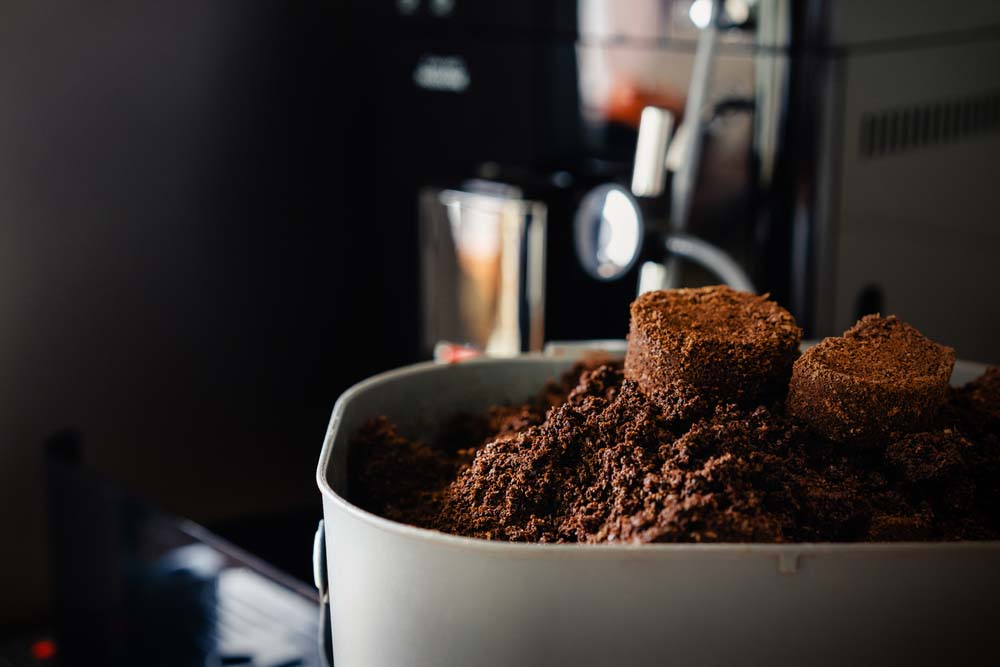
In response to the construction industry’s need to explore alternative raw materials, engineers from RMIT University have found a way to recycle coffee grounds to make concrete 30 per cent stronger.

Published in the Journal of Cleaner Production, the study conducted by RMIT engineers outlines that converting used coffee grounds into biochar through pyrolysis can turn it into a sand-substitute.

The process of pyrolysis involved heating the used grounds at 350 degrees Celsius via a low-energy process, in the absence of oxygen.

Corresponding author and research team leader Professor Jie Li stated that the ongoing extraction of natural sand around the world — typically taken from river beds and banks — to meet the rapidly growing demands of the construction industry has a big impact on the environment.

Some 50 billion tonnes of natural sand are used in construction projects globally every year.

“There are critical and long-lasting challenges in maintaining a sustainable supply of sand due to the finite nature of resources and the environmental impacts of sand mining. With a circular-economy approach, we could keep organic waste out of landfill and also better preserve our natural resources like sand,” said Li.

Lead author and RMIT University researcher Dr Rajeev Roychand said: “The disposal of organic waste poses an environmental challenge as it emits large amounts of greenhouse gases including methane and carbon dioxide, which contribute to climate change.

“The inspiration for our work was to find an innovative way of using the large amounts of coffee waste in construction projects rather than going to landfills – to give coffee a ‘double shot’ at life,” said Roychand.

Several councils looking for solutions to the disposal of organic waste have shown interest in this work, engaging the RMIT University team for upcoming infrastructure projects incorporating pyrolysed forms of different organic wastes.

Co-researcher Dr Mohammad Saberian said the construction industry needed to explore alternative raw materials to ensure its sustainability.

“Our research team has gained extensive experience in developing highly optimised biochars from different organic wastes, including wood biochar, food-waste biochar, agricultural waste biochar, and municipal solid-waste biochar, for concrete applications,” said Saberian.

Share this story

  • Share on LinkedIn
  • Share on Twitter
  • Share on Facebook

Related Articles

Billbergia’s $3.2 billion Rhodes Bay Masterplan

Billbergia’s $3.2 billion Rhodes Bay Masterplan

Calls grow for national asbestos audit

Calls grow for national asbestos audit to improve product procurement

Construction begins on sustainable Merwede district

Construction begins on sustainable Merwede district

From Classroom to Construction Site: How to Facilitate Student Involvement in the Trades

Australian construction sector welcomes EPBC reforms

Comments

Leave a comment Cancel reply

You must be logged in to post a comment.

Breaking

  • News
  • Projects
  • Trending
16 Jan

Trump Tower could rise on Gold Coast

16 Jan

AIBS says reforms pose threat to compliance integrity

12 Jan

CIBSE presents new look to reflect future ambitions

19 Dec

Queensland, WA boost first home ownership with funding schemes

17 Dec

Calls grow for national asbestos audit to improve product procurement

16 Jan

Byford Health Hub construction officially underway

15 Jan

£180m partnership advances Glasgow campus transformation

09 Jan

Burnside Village completes historic Stage 6 expansion

07 Jan

Billbergia’s $3.2 billion Rhodes Bay Masterplan

07 Jan

Meraas unveils transformative waterfront expansion for Dubai Design District

12 Jan

The need for high-performance barriers in wet, windy, and wild environment

12 Jan

AI and 3D printing are reshaping the next generation of precast concrete

06 Jan

5 New Year’s goals for jobsite safety that all construction teams should implement

16 Dec

Construction sector must act on waste now to prevent $64B bill by 2030

11 Dec

Construction trend prediction in Australia for 2026 and beyond

  • FCON 2026

Online Magazine

    Current Cover
  • Login
  • Subscribe

Subscribe

Subscribe Newsletter and Print Magazine

Associations

Our Titles

  • Share on Newsletter
  • Share on LinkedIn
  • Share on Twitter
  • Share on Facebook
  • Home
  • Contact Us
  • Terms and Conditions
  • Privacy
© Sage Media Group 2026 All Rights Reserved.
×
Authorization
  • Registration
 This feature has been disabled
 This feature has been disabled until further notice, however you may still register
×
Registration
  • Autorization
Register
* All fields required