





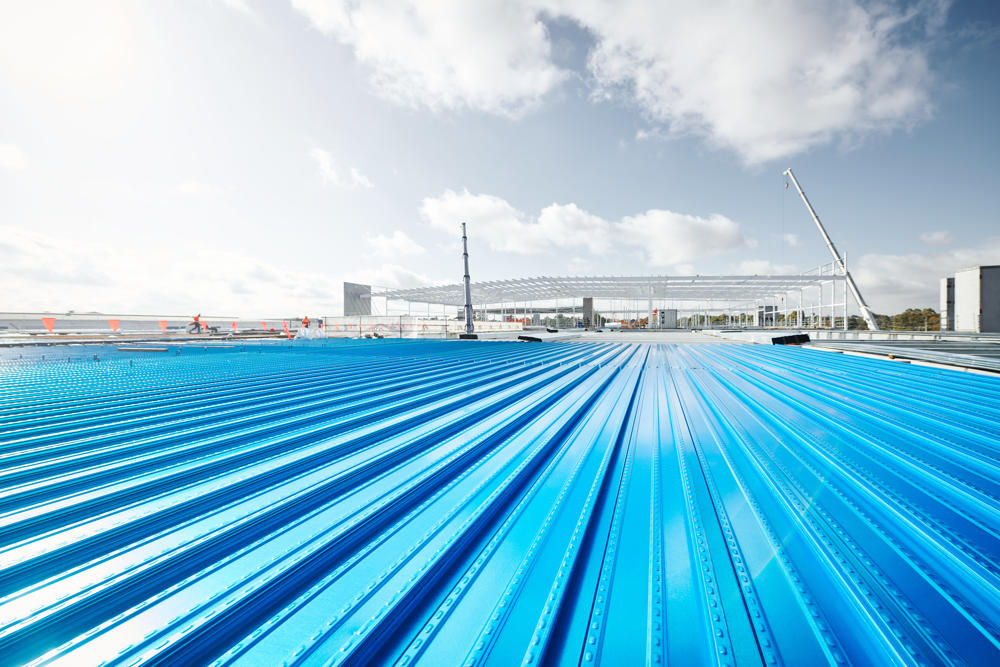
Many in the construction industry view metal decking formwork as a commodity product where every metal decking product is much the same as the next.
But it’s not always that simple.
While most metal decking products may appear similar, often there are differences in the testing, compliance, profile design, manufacturing quality and technical support. Though these differences may seem insignificant, they can have significant implications onsite.
When choosing what metal decking system to build with, there’s a lot more to consider than the sheet itself.
Testing, compliance and documentation
Not all metal decking products on the market have undergone the same level of testing or have the same level of compliance certification or technical documentation.
Before deciding on a metal decking product, design and construction teams should do their due diligence and check if the appropriate testing, certification and documentation is readily available from the supplier. If a supplier is unable to provide proof to support their performance claims, it should raise questions.
It’s also beneficial to investigate who uses, specifies and endorses the product. A system that is used by Tier 1 contractors, backed by reputable engineers and has a proven track record across multiple projects, applications and regions provides confidence that it will deliver as expected.
Profile design and structural performance
The profile design of each metal decking product also differs from supplier to supplier. The difference may seem insignificant at first, but sometimes small differences can enhance or hinder the user experience.
Every rib, knurling and flange has a role to play. Small differences in the profile geometry can affect the spanning capability, load capacity, composite action and ease of installation.
Extra ribs in the side of the profile are designed as a trap for the concrete, to eliminate concrete slurry leaking down between the sheets. Knurlings are designed to enable composite action with maximum bond to the concrete, eliminating slipping between the decking and the concrete. The flanges are designed to support the wet concrete and provide stiffness in the metal decking sheets. The interlocking edges of the decking profile are designed to simplify and speed up the installation.
When reviewing options for metal decking, engineers and builders should be cautious of profiles that have excessive voids or allow for excessive concrete volume without adding to the structural performance.
Quality of steel and manufacturing
Even if a metal decking profile has been chosen and approved for the project, the quality of the steel and consistency of manufacturing can still void its success.
Having high calibre machinery that is well-maintained can affect the consistency and accuracy of the metal decking that arrives on site. Metal decking that is rolled with worn rollers and tooling can have inconsistencies in the ribs, knurlings and flanges that make the metal decking harder to clip together, affecting installation efficiency.
Choosing a trusted supplier with a reputation for delivering high-quality, dependable products can give construction teams confidence that every sheet of metal decking will be manufactured consistently – from the first sheet rolled, to the last sheet installed onsite.
Product range and ancillary products
The sheets of metal decking are only one part of the slab construction process. Builders should also consider the range of accessories offered by the supplier, such as edge form, foam tape and tek screws.
A supplier that offers a range of metal decking profiles demonstrates an understanding that there’s no one-size-fits-all solution. Different projects have different structural requirements, spans, slab depths and design considerations.
Likewise, a supplier that offers a suite of complimentary ancillary products is often focused on making the construction process easier, faster and more efficient for the construction teams onsite.
Having access to both the range of decking profiles and the supporting accessories from one supplier can simplify procurement and help avoid costly delays caused by deliveries not arriving at the same time.
Supplier capability and support
When choosing a metal decking supplier to partner with, builders should look beyond the product itself and consider the supplier’s ability to support the project from start to finish.
Factors such as fast lead times, reliable delivery and how the decking is packed and labelled can significantly improve site efficiency and reduce material handling and site movements. A supplier with an experienced design team can also add value by providing technical support, identifying potential issues early and helping ensure the decking system is suited to the project.
A capable supplier doesn’t just deliver metal decking – they help keep the project moving by providing the products, technical expertise and service needed to meet construction deadlines.
The whole package matters
At first glance, metal decking systems can appear similar. However, when you take a deeper look, differences in testing, compliance, profile design, manufacturing quality and technical support can have a significant impact on project outcomes.
Choosing a metal decking product should involve more than comparing price alone. Builders and engineers should consider the complete package, review the proof of performance and compliance, and verify the supplier’s capability to support the project.
Need more information?
Contact FTI Group on 1300 751 701 or visit ftigroup.com.au.
Editorial note: This article and its content were produced by a sponsor.